Thursday, 26 August 2010

Why chose costume jewelry?

Costume Jewelry Makes You Look Rich and Fashionable

By: Wholesale jewelry

Fashion jewelry, also known as cheap jewelry and costume jewelry, is a low-cost alternative to expensive jewelry. Every woman wants a fine collection of bracelets, necklaces, pendants and ear-rings, and most have some exquisite pieces of genuine jewelry, but a wide collection of real gold and diamonds is not affordable for most.

This is where cheap jewelry comes into play. While it is true that, at the lower end of the market, much fashion jewelry is of low quality and is rightly called 'junk jewelry', it is also possible to get some beautiful cheap jewelry that can make you look rich and fashionable. These fashion jewelry (cheap jewelry) might not be pure gold, but will be gold plated, and will be much more affordable than luxurious jewelry.

Cheap jewelry originally became popular in the thirties when it was used as a low-cost fashion accessory for specific outfits. Cheap jewelry was an immediate hit and has been hugely popular ever since. Often, cheap jewelry is made from cheaper materials such as plastic, glass, base metals, and synthetic or non-precious stones. Although some of the more expensive cheap jewelry will use gold plating, semi-precious stones or something else, and the jewelry are still very cheap.

These cheap jewelry can even make people think they are the real luxury jewelry. Nowadays more and more people choose cheap jewelry for the sake of cheapness and cost-effectiveness. Now that cheap jewelry can function as luxuries and much cheaper, then people have no reason not to choose cheap jewelry.

About the Author

http://www.jewelryget.com/ offers cheap jewelry, wholesale jewelry and jewelry wholesale.

(ArticlesBase SC #1154022)

Article Source: http://www.articlesbase.com/ - Costume Jewelry Makes You Look Rich and Fashionable

Saturday, 21 August 2010

Jewellery for the Woman in your Life

Buying Jewellery For Women! A Guide To Choosing A Perfect Gift

By: Amy - Find Jewellery

Most women desire jewellery but often do not buy it for themselves as it is a luxury item. Giving the right jewellery as a gift can allow you to demonstrate how well you know the lady you are giving it to. It symbolises strength and longevity so it is a good gift to give to an important lady in your life, whether that is your girlfriend, wife, sister, mother or a friend. Choosing the right item can be a daunting prospect; this guide is here to try to help you to choose the perfect gift whatever their style.

Research

The first thing to consider is what she already wears. Most women will have a few items of jewellery that they love. Use these as a guide when you buy your gift.

The things to look out for are:

·The colour and type of metal she prefers. Silver, gold and white gold are the most common.

·What type of jewellery she wears. Does she have her ears pierced? If so note if her earrings are studs or drops. How about bracelets or necklaces? Try and think about the size and shapes of the items and the length of the chain of her necklaces.

·The colours that she wears. Look at both her jewellery and the colours of her clothes. If you wish to buy jewellery with coloured stones it is normally best to try to coordinate it with what she already wears. Red; start with garnet or ruby. Blue; try topaz or sapphire. Green; peridot or emerald. Yellow; citrine. Purple; amethyst. If you are unsure about colours then perhaps stick to jewellery that does not have a stone or go with diamonds or clear cubic zirconia which go with just about everything.

If you are still unsure try talking to friends and family. They are likely to be able to advise you about her preferences.

My top tips for buying the perfect gift

·Play fairly safe! If you are not 100% sure about what to choose, you should probably buy something that fits in with the research you've done.

·You could go for something that matches another item in her collection. For example if she has an amber pendant, try to find earrings to match.

·Alternatively find out her birthstone. If you need to know her birthstone you can find various birthstone jewellery here. Choosing birthstone jewellery is a lovely way to personalise a present.

·With jewellery choose quality over quantity every time.

·If possible buy real not imitation stones.

·Precious metals such as silver or gold are better than cheaper alternatives like copper. Not least because base metals such as copper could turn her green!

Good Luck! If you have any concerns please phone or email us. We will be happy to talk you through your options.


About the Author

Amy works as part of the customer service team at Find Jewellery helping customers in both the shop and online store find the perfect gift. You can find Amy, and the rest of the Find Jewellery team at http://www.findjewellery.co.uk

(ArticlesBase SC #778964)

Article Source: http://www.articlesbase.com/ - Buying Jewellery For Women! A Guide To Choosing A Perfect Gift

Make your own Jewellery

Jewellery Making

Making, wearing and possibly selling your own jewellery is very satisfying. This site How to make beaded jewelry can help and give you all the information, guidance and inspiration you will ever need. Not only does it help with all items you will need to create beautiful items, it has a photo gallery to give you inspiration.

Opals

All of Nature’s splendour seems to be reflected in the manifold opulence of fine Opals: fire and lightnings, all the colours of the rainbow and the soft shine of far seas. Australia is the classical country of origin. Almost ninety-five per cent of all fine opals come from the dry and remote outback deserts.

Numerous legends and tales surround this colourful gemstone, which can be traced back in its origins to a time long before our memory, to the ancient dream time of the Australian aborigines. It is reported in their legends that the creator came down to Earth on a rainbow, in order to bring the message of peace to all the humans. And at the very spot, where his foot touched the ground, the stones became alive and started sparkling in all the colours of the rainbow. That was the birth of the Opals.

Up to the first half of the 19th century, Opals were relatively rare. But then their career boomed suddenly and made them one of the most popular gemstones, and the start of this development brought them to the gemstone cutters of the gemstone centre of Idar-Oberstein. In the era of Art Deco the Opals experienced their flourishing, with contemporary gemstone artists preferring them to all other stones because of their subdued charm, which in turn was excellently suited to be combined with enamel, another very popular material of those days.

Opal’s colour play emanates a very special attraction and fascination. But what causes this phenomenon? This question was impossible to answer for a very long time. Only when in the 1960s a team of Australian scientists analysed Opals with an electron microscope, it was discovered that small spheres from silica gel caused interference and refraction manifestations, which are responsible for the fantastic play of colours. The spheres, which are arranged in more or less compact structures, succeed in dissecting the light on its passage through the gemstone and turning it into all the colours of the rainbow, always new and always different.

For ages people have been believing in the healing power of Opal. It is reported to be able to solve depressions and to help its wearer find the true and real love. Opals are supposed to further enhance the positive characteristics for people born under the zodiac sign of Cancer. Black Opal is recommended to those born under Scorpio, and Boulder Opal is the lucky stone for Aries.

The fantastic colour play of Opal reflects changing emotions and moods of people. Fire and water, the sparkling images of Boulder Opal, the vivid light flashes of Black Opal or the soft shine of Milk Opal – striking contrasts characterise the colourful world of this fascinating gemstone. Maybe this is the reason why it depends on our daily mood which Opal we prefer. Opals are like human emotions: you always experience them different and anew.
Source: www.gemstone.org

Sunday, 15 August 2010

Pearls

Pearls are organic gems, created when an oyster covers a foreign object with beautiful layers of nacre. Long ago, pearls were important financial assets, comparable in price to real estate, as thousands of oysters had to be searched for just one pearl. They were rare because they were created only by chance.

Today pearls are cultured by Man. Shell beads are placed inside an oyster and the oyster is returned to the water. When the pearls are later harvested, the oyster has covered the bead with layers of nacre. Most cultured pearls are produced in Japan. In the warmer waters of the South Pacific, larger oysters produce South Sea cultured pearls and Tahitian black cultured pearls, which are larger in size. Freshwater pearls are cultured in mussels, mostly in China.

The quality of pearls is judged by the orient, which is the soft iridescence caused by the refraction of light by the layers of nacre, and lustre, the reflectivity and shine of the surface. Fine pearls do not have any flaws or spots in the nacre: it has an even, smooth texture. Other factors which affect value are the regularity of the shape, size, and colour: rose tints are the most favoured.

Cultured and natural pearls can be distinguished from imitation ones by a very simple test. Take the pearl and rub it (gently!) against the edge of a tooth. Cultured and natural pearls will feel slightly rough, like fine sandpaper, because of the texture of natural nacre. Imitations will feel as smooth as glass because the surface is moulded or painted on a smooth bead.

Source: www.gemstone.org

Tuesday, 10 August 2010

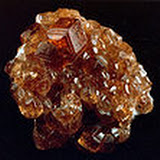
Garnet Gemstone

Aren't garnets those wonderful deep-red gemstones you often find in antique jewellery? Well yes, to a certain extent, a deep, warm red indeed being the colour most frequently found in garnets. Sadly, however, far too few people are aware that the world of the garnets is far more colourful than that. Spectacular finds, especially in Africa, have enhanced the traditional image of the garnet with a surprising number of hues - even if red does continue to be its principal colour. Thanks to their rich colour spectrum, garnets today can quite happily keep pace with changes of style and the colour trends of fashion. And thanks to the new finds, there is a reliable supply of them too. So in fact this gemstone group in particular is one which gives new impetus to the world of jewellery today.

By the term 'garnet', the specialist understands a group of more than ten different gemstones of similar chemical composition. It is true to say that red is the colour most often encountered, but the garnet also exists in various shades of green, a tender to intense yellow, a fiery orange and some fine earth-coloured nuances. The only colour it cannot offer is blue. Garnets are much sought-after and much worked gemstones - the more so because today it is not only the classical gemstone colours red and green which are so highly esteemed, but also the fine hues in between. Furthermore, the world of the garnets is also rich in rarities such as star garnets and stones whose colour changes depending on whether they are seen in daylight or artificial light.

The warm red of the garnet illuminated Noah's Ark


Garnets have been known to Man for thousands of years. Noah, it is said, used a garnet lantern to help him steer his ark through the dark night. Garnets are also found in jewellery from early Egyptian, Greek and Roman times. Many an early explorer and traveller liked to carry a garnet with him, for the garnet was popular as a talisman and protective stone, as it was believed to light up the night and protect its bearer from evil and disaster. Today, science has taught us that the garnet's proverbial luminosity comes from its high refractive index.


Gemstones for every fashion trend


Anyone who loves what is pure and natural and the warm, sun-bathed colours of late summer will be fired with enthusiasm by the colour spectrum of the garnet. Today, garnets mostly come from African countries, but also from India, Russia and Central and South America. The skilled hands of cutters the world over work them into many classical shapes, but also increasingly into modern, imaginative designer cuts. Garnets remain convincing with their natural, unadulterated beauty, the variety of their colours and their tremendous brilliance. Anyone acquiring garnet jewellery can be assured that the joy he or she derives from this beautiful gemstone gift from Nature will be long-lasting and undimmed.
Source: www.gemstone.org

Sapphire

In earlier times, some people believed that the firmament was an enormous blue sapphire in which the Earth was embedded. Could there be a more apt image to describe the beauty of an immaculate sapphire? And yet this gem comes not in one but in all the blue shades of that firmament, from the deep blue of the evening sky to the shining mid-blue of a lovely summer's day which casts its spell over us. However, this magnificent gemstone also comes in many other colours: not only in the transparent greyish-blue of a distant horizon but also in the gloriously colourful play of light in a sunset – in yellow, pink, orange and purple. Sapphires really are gems of the sky, although they are found in the hard ground of our 'blue planet'.

Blue is the main colour of the sapphire. Blue is also the favourite colour of some 50 per cent of all people, men and women alike. We associate this colour, strongly linked to the sapphire as it is, with feelings of sympathy and harmony, friendship and loyalty: feelings which belong to qualities that prove their worth in the long term – feelings in which it is not so much effervescent passion that is to the fore, but rather composure, mutual understanding and indestructible trust. Thus the blue of the sapphire has become a colour which fits in with everything that is constant and reliable. That is one of the reasons why women in many countries wish for a sapphire ring on their engagement. The sapphire symbolises loyalty, but at the same time it gives expression to people's love and longing. Perhaps the most famous example of this blue is to be found in music, in George Gershwin's "Rhapsody in Blue". And the blue of the sapphire even appears where nothing at all counts except clear-sightedness and concentrated mental effort. The first computer which succeeded in defeating a world chess champion bore the remarkable name 'Deep Blue'.
If there is talk of the sapphire, most gemstone aficionados think immediately of a velvety blue. It's a versatile colour that becomes many wearers. A blue sapphire fits in best with a well balanced lifestyle in which reliability and temperament run together and there is always a readiness to encounter things new – as with the woman who wears it. The fact that this magnificent gemstone also comes in a large number of other colours was known for a long time almost only to insiders. In the trade, sapphires which are not blue are referred to as 'fancies'. In order to make it easier to differentiate between them, they are referred to not only by their gemstone name but also by a description of their colour. In other words, fancy sapphires are described as yellow, purple, pink, green or white sapphires. Fancy sapphires are pure individualism and are just made for lovers of individualistic coloured stone jewellery. They are currently available in a positively enchanting variety of designs - as ring stones, necklace pendants or ear jewellery, as solitaires, strung elegantly together or as sparkling pavĂ©e.

However, the sapphire has yet more surprises in store. For example there is an orange variety with a fine pink undertone which bears the poetic name 'padparadscha', which means something like 'lotus flower'. The star sapphires are another rarity, half-dome-cut sapphires with a starlike light effect which seems to glide across the surface of the stone when it is moved. There are said to have been gemstone lovers who fell in love with these sapphire rarities for all time. And indeed the permanence of relationships is one of the features that are said to belong to this gemstone.

Source: www.gemstone.org