The turquoise is ancient, yet again and again it finds itself back in fashion. Its shining sky blue is one of the most popular trend colours in the world of jewellery and fashion.
In many cultures of the Old and New Worlds, this gemstone has been esteemed for thousands of years as a holy stone, a bringer of good fortune or a talisman. It really does have the right to be called a 'gemstone of the peoples'. The oldest evidence for this claim was found in Egypt, where grave furnishings with turquoise inlay were discovered, dating from approximately 3000 B.C.. In the ancient Persian kingdom, the sky-blue gemstones were earlier worn round the neck or wrist as protection against unnatural death. If they changed colour, the wearer was thought to have reason to fear the approach of doom. Meanwhile, it has been discovered that the turquoise certainly can change colour, but that this is not necessarily a sign of impending danger. The change can be caused by the light, or by a chemical reaction brought about by cosmetics, dust or the acidity of the skin.
In earlier times, turquoises were even responsible for the material wellbeing of the wearer. The Persian scholar Al-Qazwini, for example, wrote: 'The hand that wears a turquoise and seals with it will never see poverty.' Turquoises were often worn on the turban, and often surrounded with pearls, in order to protect their wearer against the 'evil eye'. As talismans, they adorned daggers, sabres and the bridles of horses. It was not until the time of the crusades that they came to Europe. Indeed it is from that period that the name 'turquoise' originates, meaning 'Turkish'.
In South, Central and North America too, the turquoise has always occupied a very special position among gemstones. The Aztecs in Mexico, for example, used to decorate their ceremonial masks with this stone which was holy according to their beliefs. The Indians of North America, who still produce a good deal of traditional silver jewellery with turquoises today, believe that the sky-blue gemstone opens up a direct connection between the sky and the sea.
At all times and over the world, turquoises have been worn as natural protection against the powers of darkness. If in earlier times they preserved horse and rider from unexpected falls, they are regarded today as the protective stone of pilots, air crews and other occupational groups who are exposed to an especially high degree of risk.
In modern gemstone therapy, those suffering from depression are recommended to wear a turquoise or a chain with turquoise beads. The turquoise' cheerful colour is said to endow reticent personalities with more confidence. It is also often given as a gift, a stone of friendship, for the turquoise is said to be responsible for faithfulness and constancy in relationships.
The colour of the turquoise makes us feel happy and cheerful, for in it the light blue of the sky and the stimulating green of the sea are combined. Indeed it is such an inimitable colour that we have coined a term specifically for it in our languages: turquoise. Anyone choosing a turquoise is sure to enjoy a piece of Heaven ... on Earth.
Source: www.gemstone.org
Showing posts with label gemstones. Show all posts
Showing posts with label gemstones. Show all posts
Thursday, 14 October 2010

Tuesday, 5 October 2010
Rock Crystal

Rock crystal lacks the array of colour found in other gemstones and is not as rare as a fine precious gemstone. However, due to its beauty, availability, and affordability rock crystal is in wide use as a gemstone. Rock crystal can have the colourless clarity of pure water, and has been known to be used as imitation diamonds.
Rock crystal is also popular as an ornamental stone. The most common use for rock crystal is in ornamental carvings and possibly the most common & well know to most people is the crystal ball used by fortune tellers, although finding rock crystal large enough with the clarity required for the crystal balls is not easy.
Many people prefer natural uncut clusters of rock crystal. These natural treasures look like crystal cities of fantasy stories. The long slender clear prisms of quartz projecting upward from a common base are true mineralogical wonders that can be admired by all. They cost of good clusters of rock crystal is quite affordable and comes from sources around the world.
Large individual crystals, some weighing over 44 tons, have been found in Brazil. Other countries that have been known for their natural rock crystal mines include the famous Hot Springs area of Arkansas, USA; Cumberland, England; St. Gotthard, Switzerland; Brazil and Madagascar.
Saturday, 2 October 2010
Charm Stones
Scientists refuse to believe it, sceptics will tell you it's just silly witchcraft talk and some probably won't have a clue what you're talking about but like it or lump it, healing stones or (charm stones as their most widely known as) are here to stay.
A charm stone is usually some form of gem or mineral (often quartz crystal) that is believed to have certain healing, paranormal or mystical energy or 'powers'. They're included in certain religions (Hindus believe they can help and Muslims worship the 'black stone' - a charm stone - regularly) but are mostly used in alternate forms of culture (Wicca) and alternate medical practices. It may seem a little strange to get your head around at first but believe it or not, they've genuinely helped in some cases.
Dating back to the prehistoric times, charm stones have been used for religious ceremonies, spiritual cleaning and offerings to the gods. Some even used them during their crop cycle in order to aid with the growth and well-being of that year’s harvest.
Nowadays though, the majority are used in sub-cultures, mostly within the 'New-Age' movement and more often than not, it'll be the 'crystal-healing' process that they'll use them for the most. This is where a 'charmed' crystal is waved around the body of the ill to aid in the healing process. Sure it sounds a little out-there but in some cases, scientists have been stumped as to how the crystals have actually helped.
Still, a lot of medical experts completely renounce the idea of 'healing stones', claiming them to be 'nothing but faux-voodoo for the hippy-generation'. In all honestly though I believe that whatever you need to help you through your illness is completely down to you and if you feel charm stones will help then why the hell not? They've been used for thousands and thousands of years and in some miraculous cases have aided where other medicine has failed.It may be a little too mystical and 'new age' for some but don't we all need a little bit of magic in our lives now and then?
Thursday, 23 September 2010
Moonstones
The moonstone really is one for the ladies as it is considered the guardian of mother nature and all things female.
Closely linked with the moon, this precious stone symbolizes new beginnings.
It is believed to promote love, unselfishness nurturing and wisdom.
It is linked with gracefulness & sensitivity
Many recognise the moonstone as an aid to help ease anxiety and stress, and helps restore a calm balance & harmony in relationships.
The healing properties of moonstones help relieve labour pains and aid in the quick physical recovery after childbirth.
Aquamarine
Aquamarine stones are traditionally used in the treatment of phobia's fears and to generally calm and soothe anxieties.
Aquamarine symbolizes honesty, courage, as well as beauty, and loyalty. It is well associated with spiritual inspiration, self-knowledge, meditation & serenity
It can aid to lift depression and help one see clearly and enhance openness and confidence.
The healing properties of Aquamarine are said to help the immune system, and breathing allergies, along with throat related illnesses.
Amethyst
The healing properties of Amethyst stones include:
Can help with spirituality and stability calmness,
Inner strength,
Inspiration
A sense of true peace.
It is said to be able to help with additive behaviour
Other healing properties of Amethyst stones include blood purification, and to enhance the immune system, amethyst also eases arthritis and can help with insomnia.
Saturday, 18 September 2010
Moonstones

Moonstones from Sri Lanka, the classical country of origin of the moonstone, shimmer in pale blue on an almost transparent background. Specimens from India feature a nebulous interplay of light and shadow on a background of beige-brown, green, orange or brown. These discreet colours, in connection with the fine shimmer, make the moonstone an ideal gemstone for jewellery with a sensual, feminine aura. This gemstone was very popular once before, about a hundred years ago at the time of Art Nouveau. It adorns a noticeably large number of the jewellery creations of the French master goldsmith René Lalique and his contemporaries, mainly to be found in museums and collections today.
The moonstone symbolises our being in its entirety. With its soft shimmer, it strengthens our emotional and subconscious aspects. The associations connected with that make it a "lovers' stone", evoking tender feelings and safeguarding the true joys of love. It is also said that wearing a moonstone strengthens our intuition and our capacity to understand.
Traditionally, the classical moonstones, almost transparent and with their bluish shimmer, come from Sri Lanka. However, they are also found in the USA, Brazil, Australia, Myanmar and Madagascar. Since bluish moonstones of good quality have been becoming more and more of a rarity in recent years, prices have risen sharply.
For a few years, there have also been some green, brown and orange specimens on the market, as well as some with a smoky colour and some the colour of champagne, and some black and some reddish ones, mainly originating from India. Some have a cat's eye effect or a four-spoked star as well as the typical undulating shimmer of light. These stones are not only cut as cabochons, but also as artistic cameos or engraved with the faces of children, the moon or grotesques. But they too have the shimmer of light typical of the moonstone, as do the beads which are cut from suitable raw material for gemstone necklaces.
When purchasing moonstone jewellery you will come across the most astonishing price differences. The more intense in colour, the larger and the more transparent, the more highly valued the moonstone. Really fine blue specimens display an incredible 'three-dimensional' depth of colour which the observer does not really come to recognise until the stone is moved about in a playful way. Specimens of that kind are highly esteemed on account of their rarity and their prices are correspondingly high. The colourful Indian moonstones, on the other hand, are not only very much in fashion. They are also, as a rule, somewhat more reasonably priced than classical blue moonstones. This means that today, anyone can select the moonstone to suit his or her taste and pocket.
Moonstones are treasures of Nature with a sensual and seductive aura. Not only do they like to be looked at and admired a lot; they also thrive on being worn and moved about a good deal, for only then can the soft shimmer of light which makes this gemstone so desirable really come into its own.
Source: www.gemstone.org
Wednesday, 15 September 2010
Carnelian Gemstone
Carnelian Gemstone is said to have healing Properties & Qualities
 Carnelian is the name given to a specific colour of agate. The word carnelian comes from the latin word for flesh (carnis). It applies to any agate that is red to dark orange to brownish in colour. Sometimes referred to as cornelion, it is found primary in India, and various sites around South America. Also found in Brazil, Australia, Russia and the US. Carnelian is a variety of chalcedony.
The most favourable pieces are deep-red to red-orange in colour. A moderately hard stone that is capable of taking a hard polish. Used for thousands of years - from the Egyptians, who filled tombs with carnelian, as they thought it had great power, and would help the souls journey to the afterlife.
Once classed as just the property of the noble classes, carnelian was often associated with social status.
Carnelian and Libra
Librans are renowned for have trouble making decisions. Carnelian is a great stone for Librans because it aids with making decisions.
Carnelian Gemstone Meanings - Emotional, Spiritual, etc.
• Carnelian protects from bad vibrations.
• Carnelian can help calm the temper.
• Carnelian helps an insecure person find strength from within.
• Carnelian can help with poverty.
• Carnelian can help in focusing and in realising goals.
• Carnelian is great for Librans - aid decision making.
• Carnelian helps to banish sorrow.
• Carnelian helps give a sense of humour.
• Carnelian can give career success.
• Carnelian can help in drama and theatrical productions etc.
Carnelian Gemstone Meanings - Healing, Medical, Physical, etc.
• Carnelian helps stop the flow of blood - helps to heal wounds and cures blood diseases.
• Carnelian helps to increase physical energy.
• Carnelian is an energy booster.
• Carnelian can be recommended for infertility and impotency.
• Carnelian helps to increase sexual energy.
• Carnelian increases appetite.
Source: www.jewellery-art.co.uk
Wednesday, 1 September 2010
Emerald Gemstones
Emeralds are fascinating gemstones. They have the most beautiful, most intense and most radiant green that can possibly be imagined: emerald green. Inclusions are tolerated. In top quality, fine emeralds are even more valuable than diamonds.
 The name emerald comes from the Greek 'smaragdos' via the Old French 'esmeralde', and really just means 'green gemstone'. Innumerable fantastic stories have grown up around this magnificent gem. The Incas and Aztecs of South America, where the best emeralds are still found today, regarded the emerald as a holy gemstone. However, probably the oldest known finds were once made near the Red Sea in Egypt. Having said that, these gemstone mines, already exploited by Egyptian pharaohs between 3000 and 1500 B.C. and later referred to as 'Cleopatra's Mines', had already been exhausted by the time they were rediscovered in the early 19th century.
Written many centuries ago, the Vedas, the holy scriptures of the Indians, say of the precious green gems and their healing properties: 'Emeralds promise good luck and enhances well-being. So it was no wonder that the treasure chests of Indian maharajas and maharanis contained wonderful emeralds. One of the world's largest is the so-called 'Mogul Emerald'. It dates from 1695, weighs 217.80 carats, and is some 10cm tall. One side of it is inscribed with prayer texts, and engraved on the other there are magnificent floral ornaments.
Emeralds have been held in high esteem since ancient times. For that reason, some of the most famous emeralds are to be seen in museums and collections. The New York Museum of Natural History, for example, has an exhibit in which a cup made of pure emerald which belonged to the Emperor Jehangir is shown next to the 'Patricia', one of the largest Colombian emerald crystals, which weighs 632 carats. The collection of the Bank of Bogota includes five valuable emerald crystals with weights of between 220 and 1796 carats, and splendid emeralds also form part of the Iranian National Treasury, adorning, for example, the diadem of the former Empress Farah. The Turkish sultans also loved emeralds. In Istanbul's Topkapi Palace there are exhibits with items of jewellery, writing-implements and daggers, each lavishly adorned with emeralds and other gems.
The green of the emerald is the colour of life and of the springtime, which comes round again and again. But it has also, for centuries, been the colour of beauty and of constant love. In ancient Rome, green was the colour of Venus, the goddess of beauty and love. And today, this colour still occupies a special position in many cultures and religions. Green, for example, is the holy colour of Islam. Many of the states of the Arab League have green in their flags as a symbol of the unity of their faith. Yet this colour has a high status in the Catholic Church too, where green is regarded as the most natural and the most elemental of the liturgical colours.
The magnificent green of the emerald is a colour which conveys harmony, love of Nature and elemental joie de vivre. The human eye can never see enough of this unique colour. Pliny commented that green gladdened the eye without tiring it. Green is perceived as fresh and vivid, never as monotonous. And in view of the fact that this colour always changes somewhat between the bright light of day and the artificial light of a lamp, emerald green retains its lively vigour in all its nuances.
Unfortunately, because the emerald is not only one of the most beautiful gemstones, but also one of the most valuable, there are innumerable synthetics and imitations. So how can you protect yourself from these 'fakes'? Well, the best way is to buy from a specialist in whom you have confidence. Large emeralds in particular should only be purchased with a report from a reputable gemmological institute. Such an institute will be able, thanks to the most modern examination techniques, to differentiate reliably between natural and synthetic emeralds, and will inform you as to whether the stone has undergone any treatment of the kind a purchaser has the right to know about.
And one more piece of advice on the purchase of an emerald: whilst diamonds generously scintillate their fire in sizes below 1 carat, you should go for larger dimensions when acquiring a coloured gemstone. True, there are some lovely pieces of jewellery with small coloured gems to set decorative accents, but emeralds, like other coloured gemstones, do not really begin to show that beautiful glow below a certain size. How large 'your' emerald ends up will depend on your personal taste, and on your budget. Really large specimens of top quality are rare. This means that the price of a top-quality emerald may be higher than that of a diamond of the same weight. The fascination exuded by a fine emerald is simply unique.
Source: www.gemstone.org

Written many centuries ago, the Vedas, the holy scriptures of the Indians, say of the precious green gems and their healing properties: 'Emeralds promise good luck and enhances well-being. So it was no wonder that the treasure chests of Indian maharajas and maharanis contained wonderful emeralds. One of the world's largest is the so-called 'Mogul Emerald'. It dates from 1695, weighs 217.80 carats, and is some 10cm tall. One side of it is inscribed with prayer texts, and engraved on the other there are magnificent floral ornaments.
Emeralds have been held in high esteem since ancient times. For that reason, some of the most famous emeralds are to be seen in museums and collections. The New York Museum of Natural History, for example, has an exhibit in which a cup made of pure emerald which belonged to the Emperor Jehangir is shown next to the 'Patricia', one of the largest Colombian emerald crystals, which weighs 632 carats. The collection of the Bank of Bogota includes five valuable emerald crystals with weights of between 220 and 1796 carats, and splendid emeralds also form part of the Iranian National Treasury, adorning, for example, the diadem of the former Empress Farah. The Turkish sultans also loved emeralds. In Istanbul's Topkapi Palace there are exhibits with items of jewellery, writing-implements and daggers, each lavishly adorned with emeralds and other gems.
The green of life and of love
The green of the emerald is the colour of life and of the springtime, which comes round again and again. But it has also, for centuries, been the colour of beauty and of constant love. In ancient Rome, green was the colour of Venus, the goddess of beauty and love. And today, this colour still occupies a special position in many cultures and religions. Green, for example, is the holy colour of Islam. Many of the states of the Arab League have green in their flags as a symbol of the unity of their faith. Yet this colour has a high status in the Catholic Church too, where green is regarded as the most natural and the most elemental of the liturgical colours.
The magnificent green of the emerald is a colour which conveys harmony, love of Nature and elemental joie de vivre. The human eye can never see enough of this unique colour. Pliny commented that green gladdened the eye without tiring it. Green is perceived as fresh and vivid, never as monotonous. And in view of the fact that this colour always changes somewhat between the bright light of day and the artificial light of a lamp, emerald green retains its lively vigour in all its nuances.
A matter of trust
Unfortunately, because the emerald is not only one of the most beautiful gemstones, but also one of the most valuable, there are innumerable synthetics and imitations. So how can you protect yourself from these 'fakes'? Well, the best way is to buy from a specialist in whom you have confidence. Large emeralds in particular should only be purchased with a report from a reputable gemmological institute. Such an institute will be able, thanks to the most modern examination techniques, to differentiate reliably between natural and synthetic emeralds, and will inform you as to whether the stone has undergone any treatment of the kind a purchaser has the right to know about.
And one more piece of advice on the purchase of an emerald: whilst diamonds generously scintillate their fire in sizes below 1 carat, you should go for larger dimensions when acquiring a coloured gemstone. True, there are some lovely pieces of jewellery with small coloured gems to set decorative accents, but emeralds, like other coloured gemstones, do not really begin to show that beautiful glow below a certain size. How large 'your' emerald ends up will depend on your personal taste, and on your budget. Really large specimens of top quality are rare. This means that the price of a top-quality emerald may be higher than that of a diamond of the same weight. The fascination exuded by a fine emerald is simply unique.
Source: www.gemstone.org
Saturday, 21 August 2010
Opals

Numerous legends and tales surround this colourful gemstone, which can be traced back in its origins to a time long before our memory, to the ancient dream time of the Australian aborigines. It is reported in their legends that the creator came down to Earth on a rainbow, in order to bring the message of peace to all the humans. And at the very spot, where his foot touched the ground, the stones became alive and started sparkling in all the colours of the rainbow. That was the birth of the Opals.
Up to the first half of the 19th century, Opals were relatively rare. But then their career boomed suddenly and made them one of the most popular gemstones, and the start of this development brought them to the gemstone cutters of the gemstone centre of Idar-Oberstein. In the era of Art Deco the Opals experienced their flourishing, with contemporary gemstone artists preferring them to all other stones because of their subdued charm, which in turn was excellently suited to be combined with enamel, another very popular material of those days.
Opal’s colour play emanates a very special attraction and fascination. But what causes this phenomenon? This question was impossible to answer for a very long time. Only when in the 1960s a team of Australian scientists analysed Opals with an electron microscope, it was discovered that small spheres from silica gel caused interference and refraction manifestations, which are responsible for the fantastic play of colours. The spheres, which are arranged in more or less compact structures, succeed in dissecting the light on its passage through the gemstone and turning it into all the colours of the rainbow, always new and always different.
For ages people have been believing in the healing power of Opal. It is reported to be able to solve depressions and to help its wearer find the true and real love. Opals are supposed to further enhance the positive characteristics for people born under the zodiac sign of Cancer. Black Opal is recommended to those born under Scorpio, and Boulder Opal is the lucky stone for Aries.

Source: www.gemstone.org
Tuesday, 10 August 2010
Garnet Gemstone
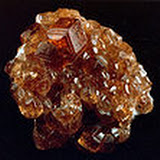 Aren't garnets those wonderful deep-red gemstones you often find in antique jewellery? Well yes, to a certain extent, a deep, warm red indeed being the colour most frequently found in garnets. Sadly, however, far too few people are aware that the world of the garnets is far more colourful than that. Spectacular finds, especially in Africa, have enhanced the traditional image of the garnet with a surprising number of hues - even if red does continue to be its principal colour. Thanks to their rich colour spectrum, garnets today can quite happily keep pace with changes of style and the colour trends of fashion. And thanks to the new finds, there is a reliable supply of them too. So in fact this gemstone group in particular is one which gives new impetus to the world of jewellery today.
By the term 'garnet', the specialist understands a group of more than ten different gemstones of similar chemical composition. It is true to say that red is the colour most often encountered, but the garnet also exists in various shades of green, a tender to intense yellow, a fiery orange and some fine earth-coloured nuances. The only colour it cannot offer is blue. Garnets are much sought-after and much worked gemstones - the more so because today it is not only the classical gemstone colours red and green which are so highly esteemed, but also the fine hues in between. Furthermore, the world of the garnets is also rich in rarities such as star garnets and stones whose colour changes depending on whether they are seen in daylight or artificial light.
The warm red of the garnet illuminated Noah's Ark
Garnets have been known to Man for thousands of years. Noah, it is said, used a garnet lantern to help him steer his ark through the dark night. Garnets are also found in jewellery from early Egyptian, Greek and Roman times. Many an early explorer and traveller liked to carry a garnet with him, for the garnet was popular as a talisman and protective stone, as it was believed to light up the night and protect its bearer from evil and disaster. Today, science has taught us that the garnet's proverbial luminosity comes from its high refractive index.
Gemstones for every fashion trend
Anyone who loves what is pure and natural and the warm, sun-bathed colours of late summer will be fired with enthusiasm by the colour spectrum of the garnet. Today, garnets mostly come from African countries, but also from India, Russia and Central and South America. The skilled hands of cutters the world over work them into many classical shapes, but also increasingly into modern, imaginative designer cuts. Garnets remain convincing with their natural, unadulterated beauty, the variety of their colours and their tremendous brilliance. Anyone acquiring garnet jewellery can be assured that the joy he or she derives from this beautiful gemstone gift from Nature will be long-lasting and undimmed.
Source: www.gemstone.org
Saturday, 7 August 2010
Ruby Gemstone
Which colour would you spontaneously associate with love and vivacity, passion and power? It's obvious, isn't it? Red. Red is the colour of love. It radiates warmth and a strong sense of vitality. And red is also the colour of the ruby, the king of the gemstones. In the fascinating world of gemstones, the ruby is the undisputed ruler.
For thousands of years, the ruby has been considered one of the most valuable gemstones on Earth. It has everything a precious stone should have: magnificent colour, excellent hardness and outstanding brilliance. In addition to that, it is an extremely rare gemstone, especially in its finer qualities.
For a long time India was regarded as the ruby's classical country of origin. In the major works of Indian literature, a rich store of knowledge about gemstones has been handed down over a period of more than two thousand years. The term 'corundum', which we use today, is derived from the Sanskrit word 'kuruvinda'. The Sanskrit word for ruby is 'ratnaraj', which means something like 'king of the gemstones'. And it was a royal welcome indeed which used to be prepared for it. Whenever a particularly beautiful ruby crystal was found, the ruler sent high dignitaries out to meet the precious gemstone and welcome it in appropriate style. Today, rubies still decorate the insignia of many royal households.
Some rubies display a wonderful silky shine, the so-called 'silk' of the ruby. This phenomenon is caused by very fine needles of rutile. And now and then one of the rare star rubies is found. Here too, the mineral rutile is involved: having formed a star-shaped deposit within the ruby, it causes a captivating light effect known by the experts as asterism. If rubies of this kind are cut as half-dome shaped cabochons, the result is a six-spoked star which seems to glide magically across the surface of the stone when the latter is moved. Star rubies are precious rarities. Their value depends on the beauty and attractiveness of the colour and, though only to a lesser extent, on their transparency. Fine star rubies, however, should always display rays which are fully formed all the way to the imaginary horizontal line which runs through the middle of the stone, and the star itself should be situated right in the centre.
Birthplaces of fine rubies
Which is the most beautiful ruby-red? Good question. The red of a ruby may involve very different nuances depending on its origin. The range of those nuances is quite wide, and could perhaps be compared to hotel categories, from luxury accommodation down to a plain inn or hostel. For example, if the gemstone experts refer to a 'Burmese ruby', they are talking about the top luxury category. However, it does not necessarily follow that the stone is of Burmese origin. It is basically an indication of the fact that the colour of the ruby in question is that typically shown by stones from the famous deposits in Burma (now Myanmar): a rich, full red with a slightly bluish hue. The colour is sometimes referred to as 'pigeon-blood-red', but the term 'Burmese colour' is a more fitting description. A connoisseur will immediately associate this colour with the legendary 'Mogok Stone Tract' and the gemstone centre of Mogok in the North of Myanmar. Here, the country's famous ruby deposits lie in a mountain valley surrounded by high peaks. Painstakingly, gemstones of an irresistible luminosity are brought to light in the 'valley of the rubies'. Unfortunately, really fine qualities are quite rare even here. The colour of a Burmese ruby is regarded as exceptionally vivid. It is said to display its unique brilliance in any light, be it natural or artificial.
The journey to the world's most important ruby deposits takes us further on to the small town of Mong Hsu in the North-East of Myanmar, where the most important ruby deposits of the nineties lie. Originally, it was believed that these rubies would hardly prove suitable for use in jewellery, since untreated Mong Hsu ruby crystals actually display two colours: a purple to black core and a bright red periphery. Only when it had been discovered that the dark core could be turned into deep red by means of heat treatment did rubies from Mong Hsu begin to find their way on to the jewellery market. Today, the Mong Hsu gemstone mines are still among the most important ruby suppliers. In the main, they offer heat-treated rubies in commercial qualities and sizes between 0.5 and 3 carats.
Ruby deposits also exist in neighbouring Vietnam, near the Chinese border. Rubies of Vietnamese origin generally display a slightly purplish hue. Rubies from Thailand, another classical supplier, however, often have a darker red which tends towards brown. This 'Siamese colour' - an elegantly muted deep red - is considered second in beauty only to the Burmese colour, and is especially popular in the USA. Ceylon rubies, which have now become very rare, are mainly light red, like ripe raspberries.
Other ruby deposits are located in Northern Pakistan in the Hunza Valley, Kashmir, Tadzhikistan, Laos, Nepal, and Afghanistan. But rubies are also produced in India, where deposits with relatively large crystals were discovered in the federal states of Mysore and Orissa. These crystals have many inclusions, but they are, nevertheless, eminently suited to being cut as beads or cabochons.
As we have said, colour is a ruby's most important feature. Its transparency is only of secondary importance. So inclusions do not impair the quality of a ruby unless they decrease the transparency of the stone or are located right in the centre of its table. On the contrary: inclusions within a ruby could be said to be its 'fingerprint', a statement of its individuality and, at the same time, proof of its genuineness and natural origin. The cut is essential: only a perfect cut will underline the beauty of this valuable and precious stone in a way befitting the 'king of the gemstones'. However, a really perfect ruby is as rare as perfect love. If you do come across it, it will cost a small fortune. But when you have found 'your' ruby, don't hesitate: hang on to it!
Source: www.gemstone.org
Thursday, 5 August 2010
Zircon
Hindu poets tell of the Kalpa Tree, the ultimate gift to the gods, a glowing tree covered in gemstone fruit with leaves of zircon. Zircon has long played a supporting role to more well-known gemstones, often stepping in as an understudy when they were unavailable.
In the middle ages, zircon was said to aid sleep, bring prosperity, and promote honour and wisdom in its owner. The name probably comes from the Persian word 'zargun', which means 'gold-coloured', although zircon comes in a wide range of different colours.
Natural zircon today suffers on account of the similarity of its name to cubic zirconia, the laboratory-grown diamond imitation. Many people are unaware that there is a beautiful natural gemstone called zircon.
Zircon occurs in a wide range of colours, but for many years the most popular was the colourless variety, which looks more like diamond than any other natural stone because of its brilliance and dispersion.
Today the most popular colour is blue zircon, which is considered an alternative birthstone for December. Most blue zircon is of a pastel blue, but some exceptional gems have a bright blue colour. Zircon is also available in green, dark red, yellow, brown, and orange.
Zircon is mined in Cambodia, Sri Lanka, Thailand, Myanmar, Australia, and other countries.
Zircon is one of the heaviest gemstones, which means that it will look smaller than other varieties of the same weight. Zircon jewellery should be stored carefully because although it is relatively hard, zircon can suffer from abrasion and the facets can be chipped. Dealers often wrap zircons in individual twists of paper so that they will not knock against each other in a parcel.
The wide variety of colours of zircon, its rarity, and its relatively low cost make it a popular collector's stone. Collectors enjoy the search for all possible colours and variations.
Source: www.gemstone.org
Subscribe to:
Posts (Atom)